How a UK Exit-Readiness Mentor Turned 15 Years of Expertise Into a Knowledge Centre That Speaks Only to Serious Buyers
Without chasing generic SEO, and without watering down her message to win the wrong clients
Client:
Christine Nicholson, Business Mentor and Exit-Readiness Specialist
Project
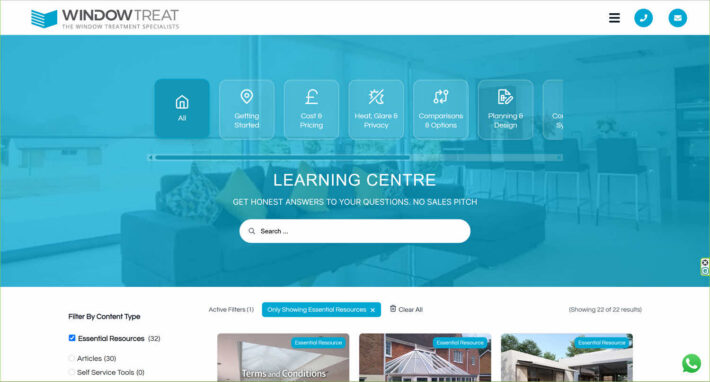
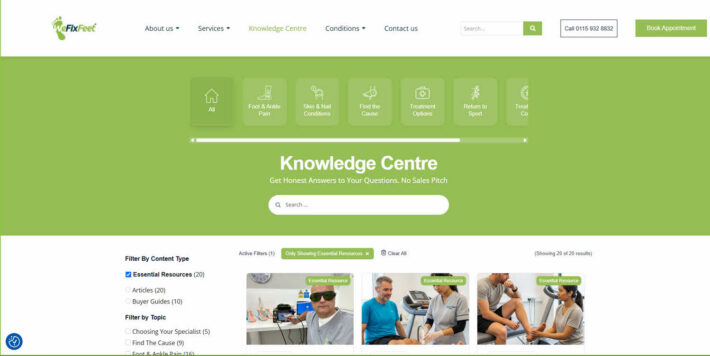
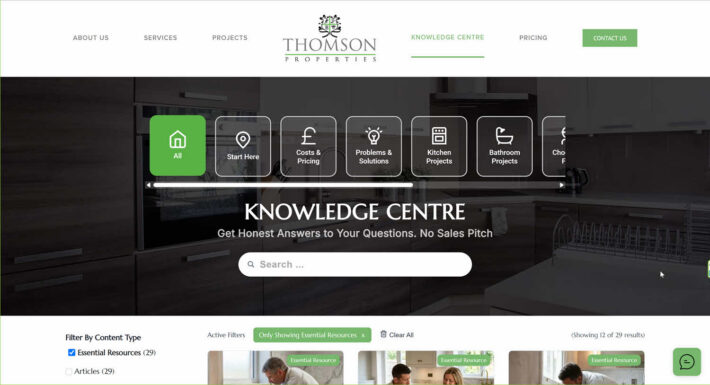
Knowledge Centre + 30x Big 5 Articles + 8x Core Topic Ultimate Guides + AI Digital Twin + 60 photos + 30 Article Summary Videos
Written by Mark Reynolds, The Knowledge Centre Guy
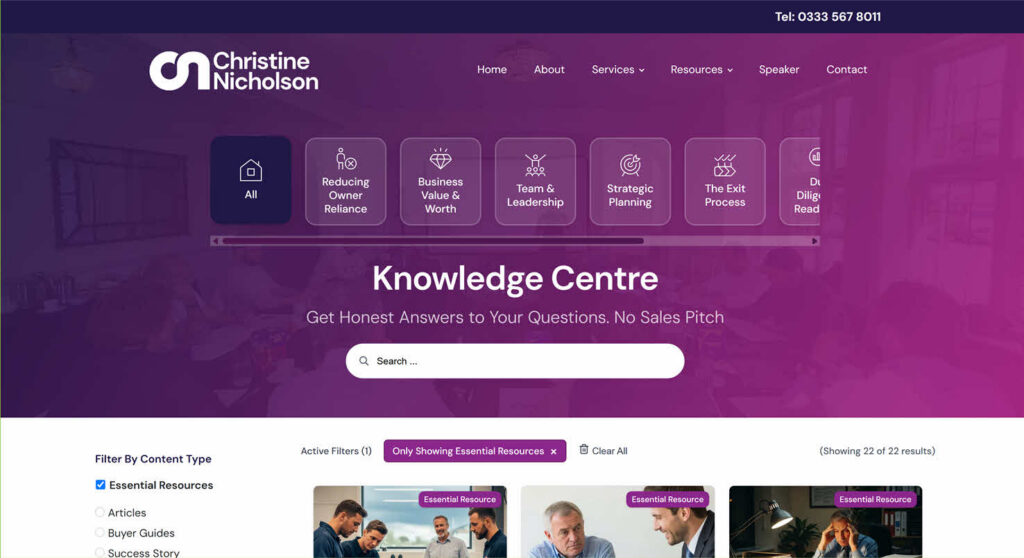
Christine already produced more content, more consistently, than most businesses ever manage. Weekly. Structured. Repurposed across her website, LinkedIn and Facebook. She did not need more.
She needed sharper.
Here is what happened when she stopped answering the questions she thought buyers were asking, and started answering the ones that actually move a serious business owner closer to a decision.
At a Glance
When you visit the Christine’s Knowledge Centre you may see some articles written by Christine and some written by me – The Knowledge Centre Guy. To save you time digging around, here are links below to some of the almost 40 articles I wrote.
When we published Christine’s Knowledge Centre I had written 8 core topic articles which are located along the top of the Knowledge Centre PLUS approximately 22 Big 5 topic articles PLUS a critical in-depth author article which is so important for credibility, and Google/AI powered search loves them.
Big 5 Topic Articles:
Author article:
Core Topic Articles:
- Strategic Planning – Core Topic page that links to related articles.
- Reducing Owner Reliance – one of the most popular Core Topic pages – (You can see the other core topic pages across the top of the Knowledge Centre in that scrollable area).
| Company | Christine, Business Mentor and Exit-Readiness Specialist |
| Who led it | Mark Reynolds, The Knowledge Centre Guy. One of only five Certified Endless Customers Partners in the UK, trained by Marcus Sheridan. |
| Industry | Professional services. B2B advisory and business mentoring. |
| Team | Founder-led expert business, supported by a small team and an assistant. |
| Problem | Plenty of consistent, well-crafted content. No strategy pointing it at the exact questions serious buyers care about before they buy. |
| What they did | Built a focused Knowledge Centre around the buyer questions that matter most: value, saleability, owner reliance and team dependency. 30 articles, three discovery sessions, collaborative question selection and short summary videos. |
| Result | For the first time in 15 years of marketing her work, a content strategy that matched exactly what she does. A Knowledge Centre engineered to attract ready buyers and quietly turn away the wrong ones. Articles in production, results compounding. |
| Best quote | “In 15 years of marketing this, this is the first time anybody has said something back to me where I thought: yeah, that’s exactly what I do.” |
| Source | Mark Reynolds, The Knowledge Centre Guy. Client engagement. Subject to client sign-off. |
Picture the kind of expert you actually want in your corner.
Christine is a multi-award-winning business mentor, author and speaker. Her work is narrow on purpose. She helps owners of established, seven-figure businesses get exit ready, so that when they do sell, the business sells successfully, for more money, on better terms.
Her central message is brutally simple. The more your business needs you, the less it is worth.
She is not short of an audience, either. Her clients come from speaking events, her book, referrals, Facebook ads, and partner groups where she is a preferred partner.
She had a structured content process most owners would kill for. Thirteen weeks planned at a time. Five repeatable article formats.
As she put it herself, “a bit like having five pairs of trousers in five different colours, but all the same style.”
So this is not the usual case-study character. This is not a business owner too busy or too disorganised to create content.
This is the opposite problem. And it is a problem far more people have than admit.
The Problem
So what was actually wrong?
Nothing you could see from the outside. That is exactly why it is so dangerous.
Christine’s content was working as a credibility tool. People who already knew her would land on the site, read, and nod along. Good.
But here is the gap. And I want you to sit with it for a second, because it is the gap most experts never spot in their own business.
It is easy to answer the questions you think your clients are asking. It is much, much harder to identify the questions that pull in the people who are genuinely ready to spend money.
Those are not the same list. They are rarely even on the same page.
Christine’s owners do not wake up and Google “how do I get exit ready?” They have never heard the term. What is going on in their heads is messier and more human:
- “Why does everything fall apart when I’m not there?”
- “Why am I working more hours as my business grows, not fewer?”
- “Why can’t my team make a decision without me?”
- “What’s my business actually worth?”
- “Can it even run without me?”
There is the external problem: a body of expertise that was not aimed at the right targets.
The internal one: the quiet frustration of knowing your message is right and watching it land softly.
And underneath it all, the philosophical one. A genuine expert with a gift this useful should not have to hope the right people stumble across it.
This is the bit I really want you to notice.
The danger of being a good content creator is that the output keeps you comfortable. You are busy. You are publishing. It feels like progress.
And all the while, the strategic question, “are these even the questions that move serious buyers?”, goes unasked. Because from the inside, you simply cannot see it.
The Guide
This is where I came in. I am Mark Reynolds, The Knowledge Centre Guy.
First, the empathy, because I have a lot of it here. Christine had done the hard yards. She was disciplined, prolific and genuinely expert.
The very last thing she needed was some agency telling her to “do more content” or chase a list of generic keywords. She was right to be wary of that.
Her instinct, “my market is different, I don’t need broad search traffic, I need credibility with warm buyers,” was correct. And I told her so.
Now the authority, because you deserve to know why my opinion is worth anything.
I have been implementing the Endless Customers by Marcus Sheridan methodology (formerly They Ask, You Answer) since 2013, before the first book was even published.
I am one of only four Certified Endless Customers Partners in the entire UK, trained personally by Marcus and his team. I have built more Knowledge Centres, across more industries, than anyone else in this country.
Here is the principle that lets me work with a market as sensitive and specialist as exit planning without breaking a sweat. Every business is in the business of trust. That is the universal. And it leads to one single question you can run any content decision through: will this induce more trust? If yes, do it.
Exit planning feels different. It is private, emotional, high-stakes, the owner’s life’s work and pension wrapped into one. But “we’re different” is the most expensive sentence in business.
The methodology does not force a sensitive B2B expert into a generic SEO box. It flexes to fit.
Look at CSI Accounting in the US. They used radical transparency not to flood themselves with traffic, but to weed out the bargain hunters and raise their average sale price by nearly 40%.
That is exactly what Christine wanted. Fewer of the wrong people. More of the right ones.
The Plan
So how do we actually fix this? Three steps. No mystery.
Step 1. We have a proper conversation about your buyers. Three discovery sessions. Not to admire your expertise, but to mine it. We dug into the real questions, the spoken ones (“how much is my business worth?”) and the unspoken ones (“I need to be there or everything falls apart”). Then we selected the questions together, so the strategy was hers, not mine imposed on her.
Step 2. I build the Knowledge Centre. Twenty articles answering those questions honestly and expertly, in Christine’s voice. Interlinked, so they work as one system rather than twenty stray blog posts.
I share the first two outlines for review before producing the rest. Then the first two finished articles for feedback before I write the others. Short summary videos sit alongside them. It is genuinely done-for-you.
Step 3. It goes to work. The articles become a credibility engine for the warm audiences she already attracts from speaking, the book and referrals. They thread straight into her sales process, where she already converts well. And over time, Google and AI start recognising her as the authority and recommending her to the next wave of buyers.
A blog talks about you. Your news, your launches, your latest market take.
A Knowledge Centre talks about them. Their questions, their fears, their costs, their comparisons.
Christine had a brilliant blog. What we built her is something different. If you’re wondering whether a done-for-you Knowledge Centre is right for your situation, that’s the honest question to ask first.
The Decision Moment
Be honest with yourself for a second. If you were already producing weekly content, would you have believed you needed help?
Probably not. That is the hardest objection of all, and it is not about money or time. It is “I’m already doing this.”
The trigger for Christine was not a crisis. It was the realisation that volume and strategy are two completely different things. She had spent years mastering the first while quietly missing the second.
The risk-reducer was simple. She did not have to take a leap of faith on twenty articles. She got to review the first two outlines, then the first two finished pieces, before anything else was written.
Wrong fit? We would have caught it at piece two, not piece twenty. That is how you take the fear out of a decision like this.
Success
Now, the bit I most wanted to share with you.
In our alignment session, I read Christine’s own strategy back to her. Her Knowledge Centre as a credibility tool for people who already know her. No generic keyword chasing. Content only for 15-plus-employee owners. Immediate operational pains connected to the deeper risk of an unsaleable business.
Here is what she said:
“You have literally just told me exactly what I do. And in 15 years of marketing this, this is the first time anybody has said something back to me where I thought: yeah, that’s exactly what I do.”
Read that again. Fifteen years. Books, talks, ads, agencies, partner groups. And the first time anyone reflected her own positioning back to her with that kind of precision was during this project.
That is not a vanity metric. That is the moment a strategy stops being a guess and becomes a system.
So what has actually changed? Not the volume of her content. Not her work ethic. Not some clever trick. Just the aim.
Before, she was producing excellent content pointed at the questions she assumed mattered.
Now there is a Knowledge Centre engineered around the exact questions that pull in serious, ready owners. And just as importantly, it gently turns away the ones who are too small, too early, or never going to change.
Think of it as a doorman who never clocks off. It does not stand outside shouting at passers-by. It stands quietly at the entrance, lets the right owners straight through, and politely tells the time-wasters the party is elsewhere.
(And reading between the lines of how relieved Christine sounded, that filtering job had been costing her a lot of wasted conversations for years.)
The articles are in production. The compounding visibility on Google and AI is still building, as you would expect this early. I am not going to pretend otherwise. But I do not need to guess at where this lands, and neither do you, because the destination is already proven elsewhere.
What This Means For You
Let me make this about you for a moment, because you are almost certainly in one of two camps.
Camp one. You barely produce any content, and you know it.
Camp two, which is far more interesting. You produce plenty. You have a process. You are proud of it. And you have quietly assumed that consistency equals strategy.
Christine was in camp two. So are most genuine experts.
And here is the uncomfortable truth that came out of this project. Producing a lot of good content is not the same as producing the right content.
You can be disciplined, prolific and respected, and still be answering the wrong questions. Because you cannot see your own blind spot from the inside. Nobody can. That is what a guide is for.
If you want to know what this does once it compounds, look at the businesses that have run this methodology for years. Dalinghaus Construction in the US went from a handful of employees to over 60, on the back of answering the buyer questions their competitors avoided.
That is the same engine Christine has just switched on. The UK is years behind the US on this, which is not a problem. It is a wide-open opportunity for whoever moves first.
Because here is the thing about a gift like Christine’s, or yours. You have a gift, and you are responsible for sharing it with the world.
If you keep it hidden behind content that talks about you instead of answering your buyers, the more transparent sharks in your market will scrape up the pieces.
Trust is not a tactic that goes out of fashion. It is a principle. Hiding only ever forces your buyers towards the competitor brave enough to answer.
The Final Word
So here is my challenge to you, and I mean it as a friend over coffee, not a pitch.
Pull up your last three months of content. Be honest. Is it answering the questions you find interesting to write about? Or the ones a ready-to-buy customer is actually typing into Google and ChatGPT at 11pm, worried, before they ever contact you?
If you cannot say for certain, that is not a criticism. It is the single most common, most expensive blind spot I see. And it is fixable.
If you would like someone who has done this since 2013, across more industries than anyone in the UK, to find your version of the questions that move serious buyers, let’s have a proper conversation.
No pitch, no PowerPoint. And if a Knowledge Centre is not right for you, I will tell you straight.
You can see what one looks like here, check what it costs with no “contact us for pricing” nonsense, or find out who AI is recommending in your market right now.
The question was never whether you can do this. It is whether you will. Make it happen.
Project Specifics
-
Knowledge Centre
-
Writing Big 5 Topic Articles
-
Assignment Selling
-
AI Visibility
-
Lead Generation
-
Buyer Education
-
Radical Transparency
-
Founder-led
-
Search Visibility
-
Trust Building