How a Multi-Award-Winning Surrey Refurbishment Company Started Future-Proofing Its Business Without Waiting for the Work to Dry Up
Jamie Thomson's pipeline was healthy. His reputation was strong. Work was, in his words, "90% of the time just there." So why build a Knowledge Centre before he needed one? Because the smart ones fix the roof while the sun's still out.
Client:
Thomson Properties - kitchen and bathroom refurbishment
Project
Knowledge Centre + 30x Big 5 Articles + 8x Core Topic Ultimate Guides + AI Digital Twin + 60 photos + 30 Article Summary Videos
Written by Mark Reynolds, The Knowledge Centre Guy
At a Glance
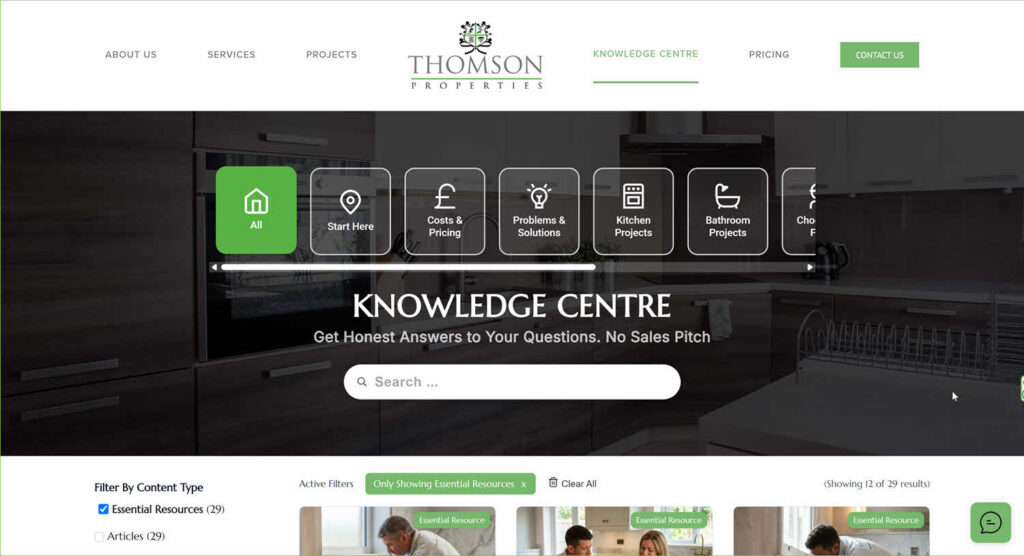
When you visit the Thomson Properties Knowledge Centre you may see some articles written by Jamie and some written by me – The Knowledge Centre Guy. To save you time digging around, here are links below to some of the almost 40 articles I wrote.
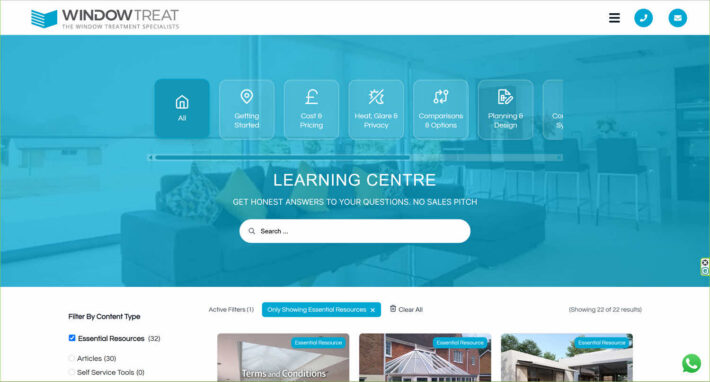
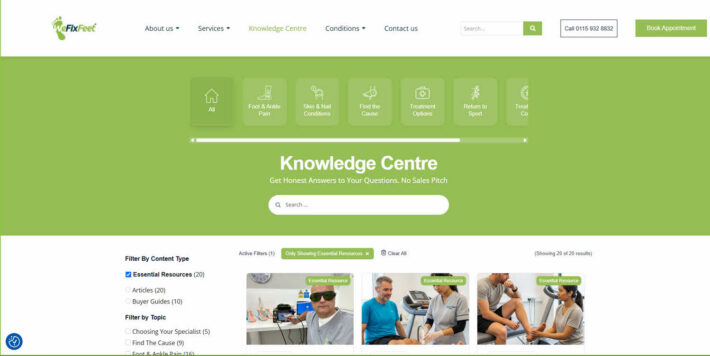
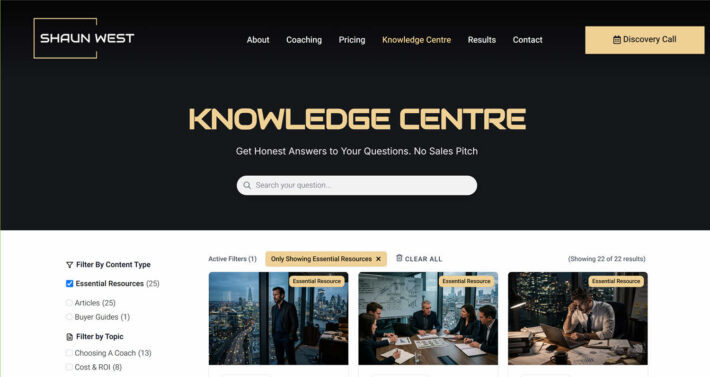
When we published Jamie’s Knowledge Centre I had written 9 core topic articles which are located along the top of the Knowledge Centre PLUS approximately 30 Big 5 topic articles PLUS a critical in-depth author article which is so important for credibility, and Google/AI powered search loves them.
Big 5 Topic Articles:
- ‘Cost’ Big 5 Article
- ‘Problems’ Big 5 Article
- ‘Comparison’ Big 5 Article
- ‘Reviews’ Big 5 Article
- ‘Best in Class’ Big 5 Article
Author article:
Core Topic Articles:
- Start Here – Core Topic page that links to related articles.
- Costs & Pricing – one of the most popular Core Topic pages – (You can see the other core topic pages across the top of the Knowledge Centre in that scrollable area).
| Company | Thomson Properties |
| Who led it | Jamie Thomson (Founder & Director), with Mark Reynolds, The Knowledge Centre Guy |
| Industry | Kitchen & bathroom refurbishment (labour-only), Surrey & West Sussex |
| Team | Founder-led. A small in-house team of multi-skilled fitters, a project manager (Liam), and a supporting office team |
| Problem | A financially healthy, reputation-led business leaning heavily on word-of-mouth, with no structured way to educate cautious buyers or protect itself if the market softened |
| What they did | Built a done-for-you Knowledge Centre and the first 20 “Big 5” articles, then put them straight to work in the sales process through Assignment Selling |
| Timeline | Around 5 hours of Jamie’s time across three discovery calls. Roughly 10 to 12 weeks from kick-off to publication. Project began July 2025. |
| Result | Building. The foundation is laid: a trust engine that answers buyers’ real questions before the first visit. Organic and AI visibility compound over 6 to 12 months, so the headline numbers are still maturing. Tracking is in progress. |
| Best quote | “We very much believe that customers don’t like surprises. When things pop up, we tell them straight away, get their thumbs up on it, get it signed off, and move on.” (Jamie) |
| Source | Mark Reynolds (The Knowledge Centre Guy), based on discovery work with Jamie and our work together. |
A good business that knew good isn’t forever
Let me paint you a picture you might recognise.
Jamie runs Thomson Properties, a kitchen and bathroom refurbishment company based around Ifold, serving Cranleigh, Guildford, Godalming, Haslemere, Horsham and the villages in between. Cranleigh and its immediate surrounds are the heart of the customer base. The business is mostly bathroom-led, with kitchens a steadily growing slice of the work.
Here’s the bit I really want you to notice. Jamie wasn’t in trouble.
The business was financially healthy. The reviews were glowing, over 400 of them.
They’ve been finalists for Best Customer Service three years running. Customers don’t just come back, they come back and bring a list.
One couple had their first bathroom done in 2022, invited the team back a couple of years later for the next one, then booked them again. Some clients say they’ll genuinely miss the fitters when they leave.
So this isn’t a “business on its knees” story.
It’s better than that. It’s the story of a busy, respected, founder-led firm that looked at all that goodwill and asked an uncomfortable question:
What happens if the well runs dry?
The Problem: word-of-mouth is brilliant, right up until it isn’t
So what was actually keeping Jamie up at night? Not the present. The future.
Word-of-mouth is the best marketing there is. It’s also the most fragile. It depends on a strong local economy, a steady stream of happy customers, and a market where people are confidently spending five-figure sums on their homes.
Pull any one of those threads and the “90% of the time it’s just there” becomes “some of the time it’s there.” Be honest, you’ve felt that wobble yourself at some point.
That’s the external problem. The market can dip. Referrals can thin out. A reputation that lives only in conversations is a reputation you don’t actually control.
The internal problem ran deeper. Jamie had read most of Endless Customers by Marcus Sheridan (formerly “They Ask, You Answer”) and had seen Marcus speak. He believed in it. He knew his business should be the most trusted, most educational voice in his patch.
But knowing what to do and having it live on your website are two very different things. Most business owners get stuck in exactly that gap. The intention is there. The execution never happens, because writing 20 brilliant articles while running a full-time fitting operation is a fantasy.
And the philosophical problem? This one matters most. Jamie genuinely believes the building trade has let homeowners down for too long.
He once dealt with an elderly couple whose bathroom had been butchered by another plumber, and it hardened something in him.
He doesn’t think a major home investment should be a gamble. He thinks people deserve to choose with their eyes open.
Listen to how he describes the people who walk through his door:
“You can just tell that they’re just on edge. Once they’ve calmed down and you’re just talking, it’ll come out that they’ve been ripped off before, treated really badly before.”
You can’t build a business on that belief and then keep all the answers locked inside your own head. That’s not transparency. That’s a secret.
Someone who’s done this since before the book was famous
Here’s where I come in, and I’ll keep my own bit short, because this is Jamie’s story.
I’m Mark Reynolds, The Knowledge Centre Guy. I’ve been implementing this methodology since 2013, before the book was a bestseller, and I’m a Certified Endless Customers partner, trained personally by Marcus Sheridan and his team.
I understood Jamie’s situation immediately, because I’ve sat across from a lot of business owners in his exact position.
People who are good. People whose customers love them. People who know they should be doing this and feel a low hum of guilt that they aren’t. I get it. I really do.
But empathy on its own doesn’t build anything. So here’s the authority bit.
A Knowledge Centre is not a blog. A blog is where company news goes to be politely ignored. Whereas a Knowledge Centre does one job: it answers the questions, fears, costs and comparisons that buyers are actually researching, and it does it better than anyone else in the market.
The magic isn’t in the website. It’s in the articles.
Written for real buyers, structured so Google can find them, and built so the new wave of AI search (ChatGPT, Google’s AI answers, Gemini, Claude) recommends you when a nervous homeowner asks, “who’s the best, most trustworthy bathroom fitter near me?”
Want to know who AI is recommending in your market right now? It probably isn’t you. Yet.
The Plan: three steps, very little of Jamie’s time
Now, I know what you’re thinking. “That sounds like months of my life I don’t have.” Fair. So here’s exactly how simple we kept it.
Step 1. Three discovery conversations. Two hours, two hours, one hour. Around five hours of Jamie’s time across a fortnight. That’s it. I do the digging, the research, the competitor analysis behind the scenes. Jamie just talks, honestly, about cost, about what goes wrong, about who he’s not the right fit for. (Clients usually tell me this part is the bit they enjoy most. It nearly always is.)
Step 2. The first 30 articles, written to a gold standard. We prioritised the two categories that move the sales needle hardest: cost and problems. Around five or six cost articles. Eight or nine problem articles. A couple of comparisons, a couple of reviews, a couple of best-in-class pieces. Then we publish them onto the existing site, add an “essential resources” filter so anxious buyers find the most important answers first, and produce short summary videos for every article using the AI digital video twin I built.
Step 3. Use it in the sale from day one. This is Assignment Selling, and it’s where the real power lives.
Before a prospect ever sees a quote, they’re sent the honest cost article, the “real risks of a one-man band” piece, the “who will be in my house” article. They turn up to the first meeting already half-sold and properly informed. Price is never judged in a vacuum.
No website rebuild. No starting from scratch. Jamie liked his website, and frankly it was a perfectly good foundation, professional, well-built, with a pricing link already in place (rare, and a very good sign). The opportunity was in the content and the messaging, not the bricks. Why knock down a sound wall just to repaint it?
The whole point of the discovery calls was to get Jamie’s real thinking out of his head and onto the page. Like this, on why his fitters are the difference:
“We hire more for character and attitude, and then secondly for skill. We want to be putting the right type of person into people’s homes.”
That belief was always true. It just wasn’t findable. Now it is.
Why now, when the work was “just there”?
So here’s the decision Jamie faced, and it’s the one I want to put to you.
He could have done nothing. The work was coming in. The phone was ringing. Most owners in that position keep their head down and enjoy the sunshine.
Jamie didn’t. He invested while the business was strong, specifically so it would be better protected when things got harder. Not because he was panicking. Because he wasn’t.
Think about the trade most people are tempted to make here. “I’ll sort the content out when I need it.” But a Knowledge Centre is the slowest-cooking, highest-compounding asset you’ll ever build. Organic search takes 6 to 12 months to really hum. AI tools may start recommending you within weeks, but the deep trust builds over time. So the worst possible moment to start is the moment you’re desperate, because by then you’ve already missed a year of compounding.
Now, I know the objection that’s forming. “But Mark, we’re different. We’re a small local trade. This transparency stuff is for big slick companies.”
No. Every business is in the business of trust. Yours especially, because you’re asking strangers to let you live inside their home for 15 working days. There’s only one question worth asking about any of this: will it induce more trust? If yes, do it.
Hiding your prices, dodging the “what goes wrong” questions, staying vague, that’s the ostrich move. And while you’ve got your head in the sand, the transparent shark down the road is answering the very questions you’re avoiding.
If you don’t do it, other sharks in your market will scrape up the pieces.
Success: what’s real, and what’s still cooking
Here’s the part where most case studies start inventing numbers. I won’t.
This is a recently built foundation. The Knowledge Centre is live and the articles are doing their work in the sales process now. But organic traffic and AI recommendations compound over months, not days, so I’m not going to wave a giant traffic figure at you that doesn’t exist yet. That would defeat the entire point of an exercise built on honesty.
Here’s what is true today:
- Jamie now owns a structured, gold-standard library of answers to the exact fears his buyers carry: letting strangers into the home, the job being abandoned halfway, mess, poor communication, surprise costs, dodgy work behind the tiles, and the dread of “will he even answer the phone after I’ve paid?”
- His team can hand a nervous prospect the right article at the right moment, so the first visit starts from trust instead of suspicion. Liam, the project manager, has always loved winning over the anxious ones in those first few jittery days. Now he’s got the content to do half that work before he’s even through the door.
- The differentiators that were trapped in Jamie’s head (continuity, the daily WhatsApp videos from fitters, the 48-hour site visits, the “character first, skill second” hiring, the three-year labour guarantee) are now written down, public, and selling for him while he sleeps.
When I asked Jamie why he was doing this now, with the order book healthy, his answer came down to this. The work had been there roughly 90% of the time, and he wasn’t willing to gamble the next decade on it staying that way. (That’s my paraphrase of his thinking, not a polished soundbite. Jamie’s not a soundbite kind of bloke.)
What he did say, word for word, tells you everything about why this works for a business like his:
“It’s in our best interest to get it done and get out of there as soon as we can. But we’d rather have a job that’s overrun by even four days, and the customer’s happy.”
That’s the whole methodology in one breath. Do right by the buyer, even when it costs you. Now that instinct isn’t just lived out on site. It’s written down, public, and earning trust before anyone picks up the phone.
Before: a brilliant business whose reputation lived in conversations Jamie couldn’t see or control.
After: a brilliant business whose reputation is written down, discoverable, and working 24 hours a day, the moment a homeowner in Cranleigh starts Googling at 11pm.
What this means for you
So what does Jamie’s decision actually say to you, sitting there with a healthy order book and a nagging “I should really do something about my marketing”?
It says: don’t wait for the leak before you waterproof. A Knowledge Centre built during the good times is an insurance policy that pays out in the bad ones. Built during the bad times, it’s a rescue mission that arrives a year too late.
And if you’re tempted to think the proof only exists across the Atlantic, you’re half right, and that’s the opportunity.
Take RetroFoam in the USA. Stagnant, plateaued, fighting bigger insulation brands.
They leaned into the comparison and cost questions everyone else was too scared to answer, and they doubled the business. (Marcus tells their full story in the Endless Customers book.) That’s not a Thomson Properties result, to be clear, it’s documented proof of where this methodology leads.
The Americans are years ahead on this. Which means the UK market is wide open for whoever moves first. Reading between the lines of every market I look at, that “whoever” is almost always the business that started before it had to.
The principles don’t care whether you fit bathrooms in Surrey or sell software in Slough. Trust is universal. Buyers research relentlessly, they want honest answers, and they hand their business to whoever earns their confidence first.
You have a gift. You’re responsible for sharing it with the world. Make it happen.
Your move
If you’ve read this far, you’re probably feeling that same low hum Jamie felt.
You know your business deserves to be the trusted name in your patch. You know the answers are already in your head. And you know that “I’ll get round to it” has been your plan for about two years now.
Here’s the honest question to sit with. Not can you build this. You can. The real one is: will you start while things are good, or will you wait until you’re forced to?
When you’re ready to stop hoping the work keeps showing up and start making sure it does, here’s what to do next:
- Curious what one actually looks like? Take a wander round my own Knowledge Centre, and read what a Knowledge Centre is and whether it’s worth it.
- Wondering if it’s right for a business like yours? Start here: is a done-for-you Knowledge Centre right for us?
- Want the numbers before the conversation? I publish them, naturally: the cost of a Knowledge Centre and the done-for-you service itself.
- Ready for a proper chat? Book a free 30-minute conversation with me here. No pressure, no hard sell. Just a straight conversation about whether this is right for you.
Jamie didn’t wait for the rain. The question is whether you will.
This case study is based on discovery work carried out with Jamie. Thomson Properties is a client of mine. Results from organic search and AI recommendation build over 6 to 12 months and are being tracked. Where I’ve pointed to other companies, such as RetroFoam, those are documented by Marcus Sheridan in the Endless Customers book and are included only as proof of where the methodology leads, not as my own client results.
Project Specifics
-
Knowledge Centre
-
Writing Big 5 Topic Articles
-
Assignment Selling
-
AI Visibility
-
Lead Generation
-
Buyer Education
-
Radical Transparency
-
Founder-led
-
Search Visibility
-
Trust Building