How a Freight Company With No Marketing Budget Went From 5 Leads a Month to 125, Without Hiring a Single Marketer
The CEO couldn't afford a content team. So he wrote all 92 articles himself in year one. Here's exactly what happened, and why it matters for your business, even if you're a team of one.
They did it themselves:
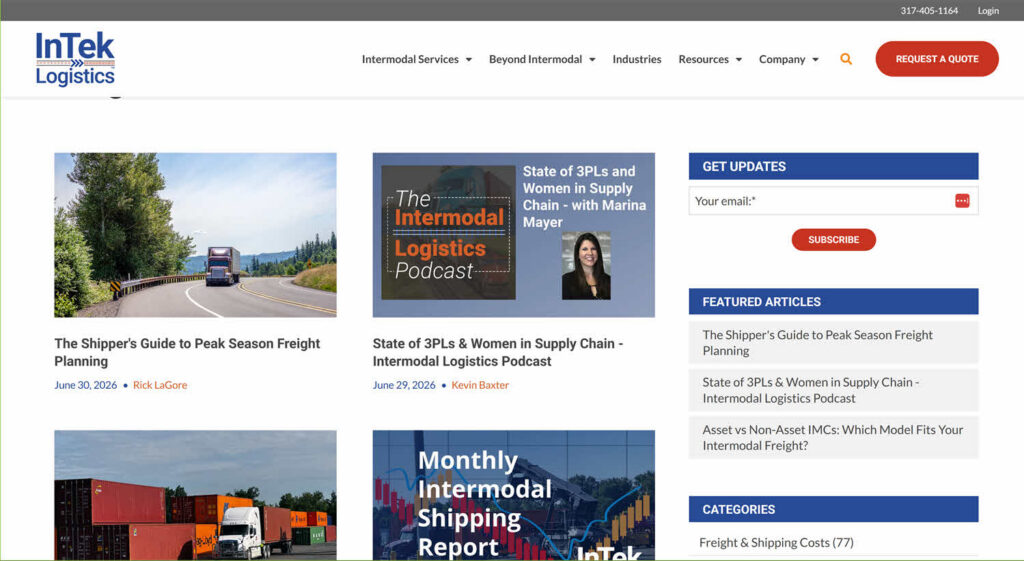
InTek Freight & Logistics are documented by Marcus Sheridan in his book Endless Customers as a true success story of implementing the same Knowledge Centre methodology.
Project
Knowledge Centre & Big 5 Topic Articles
Written by Mark Reynolds, The Knowledge Centre Guy
At a Glance
| Company | InTek Freight & Logistics |
| Who led it | Rick LaGore, CEO |
| Industry | Freight and logistics |
| Team behind the content | One person. The CEO. |
| The problem | 5 to 8 leads a month. No budget to hire a marketing team. |
| What they did | Applied the Endless Customers methodology (They Ask, You Answer) and wrote every article in-house |
| The work | 92 articles, written by the CEO, in the first year |
| The result | 125 leads a month through content alone |
| Source | Documented by Marcus Sheridan in the Endless Customers book. This is not a client of mine (The Knowledge Centre Guy) but I am a Certified ‘Endless Customers’ Partner trained by Marcus Sheridan and his team. |
Quick bit of honesty before we start. This is not a client of mine. InTek is a company Marcus Sheridan worked with in the USA, and he tells their story in his book. I’m a Certified Endless Customers Partner, trained by Marcus and his team to deliver the exact same methodology here in the UK. I wanted to show you what that methodology has done for real businesses, on both sides of the Atlantic, before I ever ask you to believe what it could do for yours.
So, want to hear the story that kills the “I haven’t got the budget for this” excuse stone dead?
One busy CEO. No agency. No marketing hire. No five-figure budget. Just a decision most owners are far too nervous to make, and a result that should make you sit up.
Here’s the thing I really want you to notice as you read. The hero of this story isn’t clever software or a big spend. It’s a principle. And the principle works whether you sell freight, fit kitchens, or do anybody’s books.
Stick with me. (It pays off, I promise.)
What Did Rick Actually Want?
Same thing you want, if I had to guess.
Rick LaGore runs InTek Freight & Logistics. Freight is not glamorous. It’s crowded, it’s competitive, and buyers have a long list of nervous questions before they trust anyone with their shipments.
Rick knew his company was good. That was never the problem.
The problem was that almost nobody could find him. The website sat there looking respectable and doing next to nothing. Five to eight leads a month were trickling in. Enough to keep the lights on. Never enough to breathe.
What he wanted was simple. To be the business buyers find first and trust most. Not the best-kept secret in his market. The obvious choice.
He just had no money to make it happen. Sound familiar yet?
The Real Problem Was Never “Not Enough Leads”
Be honest with yourself for a second here.
When the phone isn’t ringing, it’s never really about the number on a report. It’s about three things stacked on top of each other.
On the surface, Rick had a lead problem. Five to eight a month isn’t a growth engine. It’s survival.
Underneath that sat the quiet frustration. He’d built something genuinely good and the people who needed it couldn’t see it. You know that feeling. The gap between how good you actually are and how invisible you feel online. It gnaws at you.
And underneath that was the part that’s almost unfair. The companies beating him in the search results weren’t better at freight. They were just better at being found. Think about what that actually is. A brilliant business losing to a louder one. That shouldn’t be how it works.
Then add the kicker. Rick couldn’t buy his way out. No budget for a content team. No agency retainer. No marketing hire waiting in the wings.
For most owners, this is where the story ends. “I’d love to do it properly, but I can’t afford to.”
Rick didn’t end the story there. And that one choice changed everything.
The Bit That Should Stop You In Your Tracks
What Rick reached for wasn’t a tool or a trick. It was the proven methodology that every Knowledge Centre I build is based on. Endless Customers by Marcus Sheridan (formerly ‘They Ask, You Answer’).
It rests on three truths that have never changed, and never will.
Your buyers have questions. They want to buy from people they trust. And the most helpful teacher in any market wins.
That’s the whole engine. The businesses that honestly answer their buyers’ questions, including the awkward ones about price, problems, comparisons and “is this even right for me?”, become the ones buyers, Google and ChatGPT recommend. Not by shouting louder. Not by spending more. Just by being more helpful than anyone else.
Now here’s why this mattered so much for a man with no budget. The method doesn’t ask you to outspend your competitors. It asks you to out-teach them. And who knew the answers to a freight buyer’s real questions better than the person running a freight company?
Nobody. That person was Rick.
“You’ll notice this is a US company. Does that matter?” Not a bit. Marcus is American, so Endless Customers has a huge following over there, and the names and sectors in his book will feel very American to you. But the thing this whole method runs on is trust. And trust is universal. It works exactly the same in Birmingham as it does in Boston. If anything, the US is a few years ahead of us, which Marcus told me himself, so UK businesses get to copy what works and skip the mistakes. That gap is a genuine opportunity, and right now it’s wide open.
“Yes, But We’re Different”
I can almost hear it. “Mark, that’s freight. We’re a B2C business. We’re smaller. We’re more complex. We’re in a regulated industry. We’re different.”
I hear it on nearly every call. And it’s the single most expensive thought a business owner can have. It quietly poisons the waters of business innovation, and it’s almost always fear of change wearing a sensible suit.
So let me hand you the way through it.
Every business on earth, no matter the size, sector, or rulebook, is ultimately in the same business. The business of trust, and who can earn the most of it.
Boil the whole methodology down to one single question and ask yourself this. Will this make my buyers trust me more?
If being honest about your pricing would build trust, the answer is yes. If openly tackling the problems with your product would build trust, yes. If fairly comparing yourself to the alternatives would build trust, yes again.
And if the answer is yes, then you are not different. Not in any way that matters. Search engines change. Platforms change. AI changes by the month. But trust is a principle, and principles don’t change.
Bury your head in the sand and refuse to answer your buyers’ toughest questions, and you don’t make those questions disappear. You just send your buyers to a competitor who will answer them. As Marcus likes to put it, if you don’t do it, other sharks in your market will scrape up the pieces.
The Plan Was Simple Enough For One Person To Run
This is the part that matters most when you’re already flat out, so I’ll keep it plain.
Rick didn’t switch platforms. He didn’t restructure the company. He didn’t hire a soul. The plan was about as simple as a plan gets.
First, work out the real questions. What are freight buyers actually typing into Google, and asking before they commit? Not what the company wanted to say. What buyers needed to know.
Second, answer them honestly, one article at a time. The big, money-related topics buyers care about most. Written by the one person who knew the answers cold. The CEO.
Third, keep going. Not a one-off burst of enthusiasm. A steady habit of answering the next question, then the next.
That’s the machine. Diagnose the questions, answer them properly, repeat.
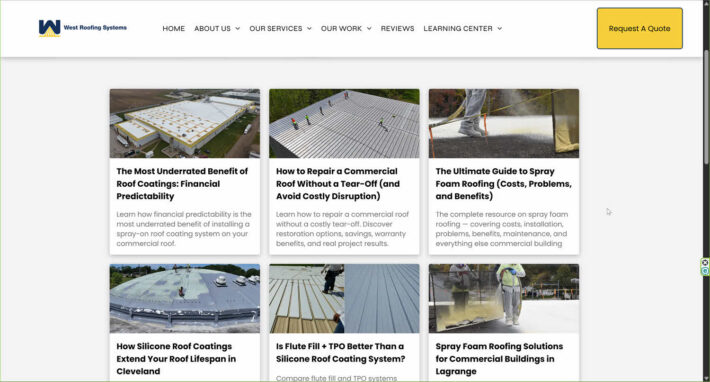
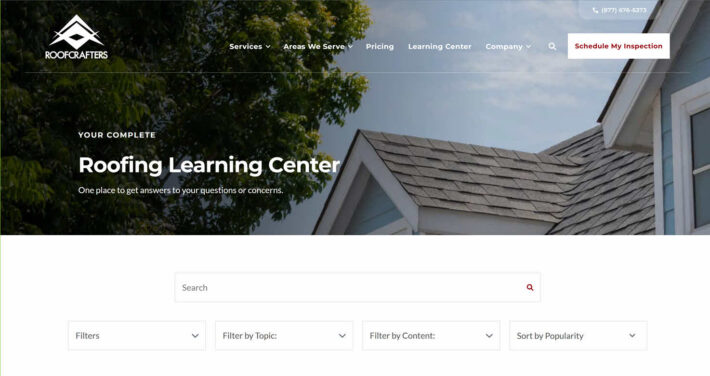
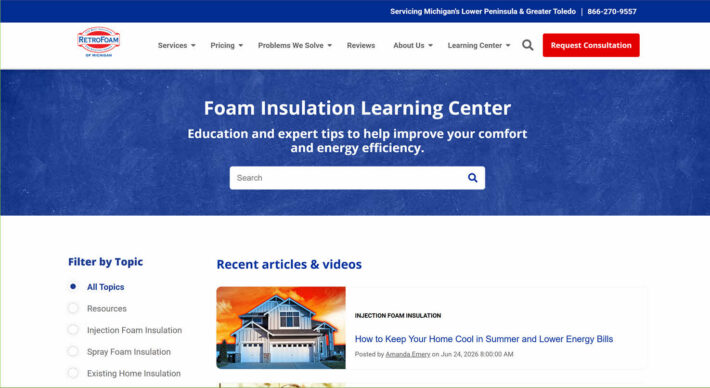
A quick word on where those articles lived, because this trips people up. They didn’t go on the company blog. They went in a Knowledge Centre, which is a dedicated section of the website that’s deliberately kept separate from the blog. Your blog is for company news, opinions and announcements. It’s what you want to say, and it tends to catch people early, before they’re really buying. A Knowledge Centre does the opposite job. It answers the questions of people who are actively trying to make a buying decision right now. (If you want the full explanation, I’ve written one here: What’s a Knowledge Centre, and is it worth it?)
And I won’t pretend the writing was effortless, because that would insult anyone who’s ever stared at a blank page at 9pm. Ninety-two articles in a year, on top of running a company, is a serious slog. Roughly two a week, every week, while doing the day job. Reading between the lines, I’d put money on a fair few late nights in there.
But look at what it did not need. No budget. No team. No permission from anyone. Just a decision, and the grit to keep it.
So What Actually Changed?
Here’s the number that makes people put their coffee down.
In that first year of answering his buyers’ questions, properly and consistently, InTek went from 5 to 8 leads a month to 125 leads a month.
Let that sink in. Not a 20% bump. Not a “noticeable improvement.” A business scraping together a handful of enquiries became one fielding well over a hundred a month. Through content alone. Built by one man who couldn’t afford to hire anyone.
That’s the difference between a website that decorates your business and one that feeds it.
And here’s the bit even better than the lead count. InTek stopped being a secret. By the time a buyer picked up the phone, the articles had already done the explaining, the educating and the trust-building. People arrived warm, informed, and halfway to a yes. That’s a Knowledge Centre doing the job your best salesperson does. Except this one works every hour of every day, never takes a holiday, never has an off day, and never once asks for a pay rise.
Now, a straight word, because this whole method is built on straight words. A result like that is not a guarantee. The numbers weren’t magic. They were the output of 92 honest answers to real buyer questions. The method handed Rick the map. His determination is what walked the miles. Money didn’t decide this. Effort did.
The Honest Truth About Doing It Yourself
This is where I have to show you both sides of the coin, because pretending only one side exists would make me exactly the kind of provider this methodology exists to replace.
The case studies in Marcus’s book, including this one, are the success stories. They’re real. But here’s the other side. For every Rick, there are plenty of DIY business owners who give it a go and never get there. Not because the method failed them. Because they ran out of road. Eight half-finished articles, a creeping sense of guilt, and a quiet “we’ll get back to that content project eventually.” You might know the feeling.
And then there are the DIYers who absolutely nail it. Rick did. So can you. The single thing that separates the two camps isn’t budget or industry or talent. It’s determination. Plenty of owners sit down to write. Only the most stubborn and resilient keep writing to the standard and the numbers that actually move the needle.
So be honest with yourself. Are you a natural writer with ten hours a week genuinely protected in your calendar and a deep grasp of the Big 5? If yes, go for it, and I mean that. (I’ve written an honest guide on exactly that decision here: Is a done-for-you Knowledge Centre right for us?)
But if that’s not quite you, here’s the other option Rick never had.
Hand it to me, and I get it done. To a good speed. And to a world-class standard. So you’re not sitting in exactly the same spot twelve months from now, then twenty-four months from now, still meaning to start. Imagine that feeling. The moment you finally pass it to someone who simply gets it done, and you can get back to running your business.
That’s the whole point of my 100% done-for-you Knowledge Centre service. And if you’re wondering what something like that costs, I’ve laid the real numbers out plainly here, no “request a quote” nonsense: How much does a done-for-you Knowledge Centre really cost?
What This Means For You
Let me bring it home, because this part is about your business, not Rick’s.
If a freight CEO with no budget and no team can answer his buyers’ questions and turn 5 leads a month into 125, what is honestly stopping you?
Not money. Rick had none to spend.
Not time, not really, because the cost of staying invisible is far higher than the cost of fixing it, and somewhere inside you already know that.
The only honest answer left is nerve. The willingness to put your real expertise out into the open, answer the questions your competitors are too scared to touch, and become the most trusted teacher in your market. You have a gift, and you’re responsible for sharing it with the world. So make it happen.
One last thing, and I want you to actually do this. Go and look at the articles in my own Knowledge Centre. Then compare them to anyone else’s. Marcus gave the world the methodology. I’ve taken it and aimed it at building the best Knowledge Centres on the planet, including past the ones his own agency builds in the case studies. I’m not asking you to take that on trust. Read the articles and decide for yourself.
Because the real product was never “a website section.” It’s the articles, and the way they’re written and optimised to be found by buyers, by Google, and by ChatGPT, at the exact moment someone is deciding who to trust. Rick proved the method works. The question is who builds yours, and how well.
Is that going to be you, quietly meaning to start? Or the business down the road who actually does?
Ready To Stop Being The Best-Kept Secret In Your Market?
Want me to just get it done for you? Book a 30-minute call. We’ll talk about your business, your buyers, and the questions they’re really asking, and whether a Knowledge Centre is the right move for you. No pressure, no jargon.
Want to know who’s recommending you first? Find out where you stand in AI search in about 15 minutes with my free guide, Is AI Recommending Your Small Business?
Curious who’s behind this? Here’s a bit more about me, Mark Reynolds, and why I do this work.
This case study describes the experience of InTek Freight & Logistics as documented by Marcus Sheridan in his book Endless Customers. InTek is not a client of Mark Reynolds. It is shared as proof of the methodology Mark is certified to deliver. Results vary by business, market, and the determination behind the work, as Rick’s own story makes clear.
Project Specifics
-
Knowledge Centre
-
Writing Big 5 Topic Articles
-
Content Strategy
-
Lead Generation
-
Buyer Education
-
Search Visibility
-
Founder-Led