How Two Brothers Grew Their Construction Firm 40% in a Year, and Scaled From a Handful of Staff to Nearly 60, Without Spending a Penny More on Ads
Dalinghaus Construction was pouring money into website redesigns and paid search and getting modest growth for it. Then they started answering the questions their buyers were really asking. Here is exactly what happened, and why it matters for your business, whatever you sell.
They did it themselves:
Dalinghaus Construction is documented by Marcus Sheridan in his book Endless Customers as a true success story of implementing the same Knowledge Centre methodology.
Project
Knowledge Centre approach + Big 5 buyer-question content + Assignment Selling (built in-house by the marketing and sales teams)
Written by Mark Reynolds, The Knowledge Centre Guy
At a Glance
| Company | Dalinghaus Construction |
| Who led it | Justin Sexton (Marketing Manager), backed by co-founder Brian Dalinghaus |
| Industry | Foundation repair and concrete work, residential and commercial. California and Arizona, USA |
| Team | A handful of staff at the start. Almost 60 today |
| Problem | Expensive website redesigns and heavy paid-search spend that only ever delivered modest, steady growth |
| What they did | Built a library of honest, in-depth articles answering their buyers’ real questions, then put those articles to work inside their sales process |
| Result | 40% increase in revenue (roughly $7.5m to $10.5m), 56% more deals closed, 141% jump in deal velocity |
| Source | Endless Customers by Marcus Sheridan, plus Dalinghaus’ published results |
A quick, honest note before we start. This story is documented by Marcus Sheridan in his book Endless Customers. Dalinghaus is not a client of mine. I’m Mark Reynolds, The Knowledge Centre Guy, and I’m one of only five officially trained Endless Customers partners in the UK, trained personally by Marcus Sheridan and his team to implement this exact methodology. I’m sharing their story because I want you to see, with real numbers, what this approach does for ordinary businesses on both sides of the Atlantic.
Two brothers, doing everything “right”, and still stuck
Let me take you to Southern California for a minute. Brad and Brian Dalinghaus started their construction firm there back in 2011. Good work, great service, growth by referral. The kind of business you’d be proud to run.
They’d worked with agency after agency over the years. And every single one handed them the same prescription. “You need a new website.”
So they paid for new websites. More than once. They paid for the mediocre blog articles those agencies churned out. They poured money into paid search ads.
Growth came. But it was modest. Steady at best.
Sound familiar?
(I see this in the UK constantly. The endless website redesign. The retainer that produces “content” nobody reads. The ad spend you daren’t switch off, because it’s the only thing keeping the phone ringing.)
Something had to change.
What actually moved the needle (and it wasn’t a new website)
Here’s the part I need you to hear, because it’s the whole game.
Their marketing manager, Justin Sexton, picked up a book called They Ask, You Answer. You’ll know it today as Endless Customers by Marcus Sheridan (formerly They Ask, You Answer). It’s the proven methodology that every Knowledge Centre I build is based on.
Justin read it first. Then handed it to co-founder Brian. Then the whole company read it. And they realised this was the direction they’d been missing. (Reading between the lines, I’d put money on that first read feeling less like a marketing book and more like someone finally putting their problem into words.)
The idea is almost embarrassingly simple. Your buyers have questions. Answer them. Openly, honestly, in real depth. Especially the awkward ones about cost, problems and comparisons. The elephant-in-the-room questions your competitors are too nervous to touch.
That’s it. That’s the engine.
Not a new website. Not a clever logo. The articles. And, just as importantly, how those articles are written and structured so buyers find them, trust them, and act on them. That is the real work. That is what I obsess over.
So where do these articles live? Not on your blog
This trips a lot of people up, so here’s the difference in plain English.
A blog is where a business says what it wants to say. Company news. Opinions. Event announcements. General thought leadership. It’s usually early-stage material for people who aren’t ready to buy yet.
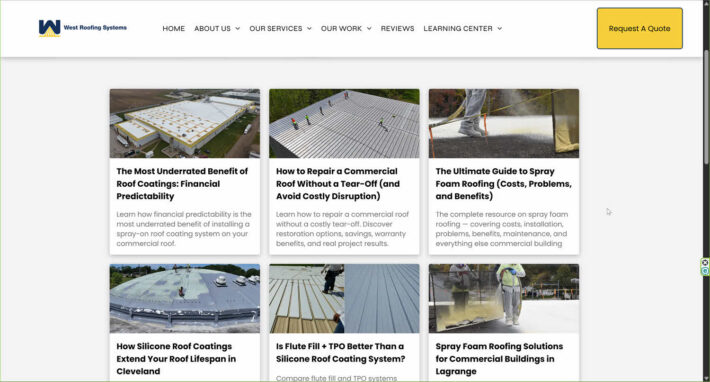
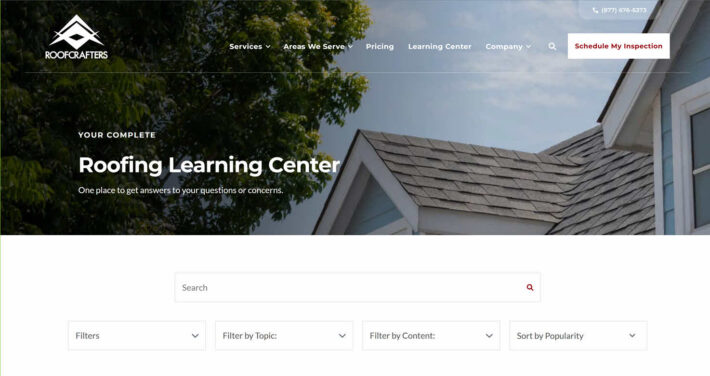
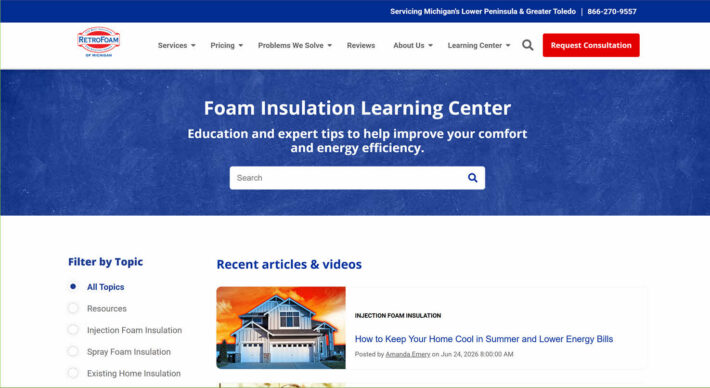
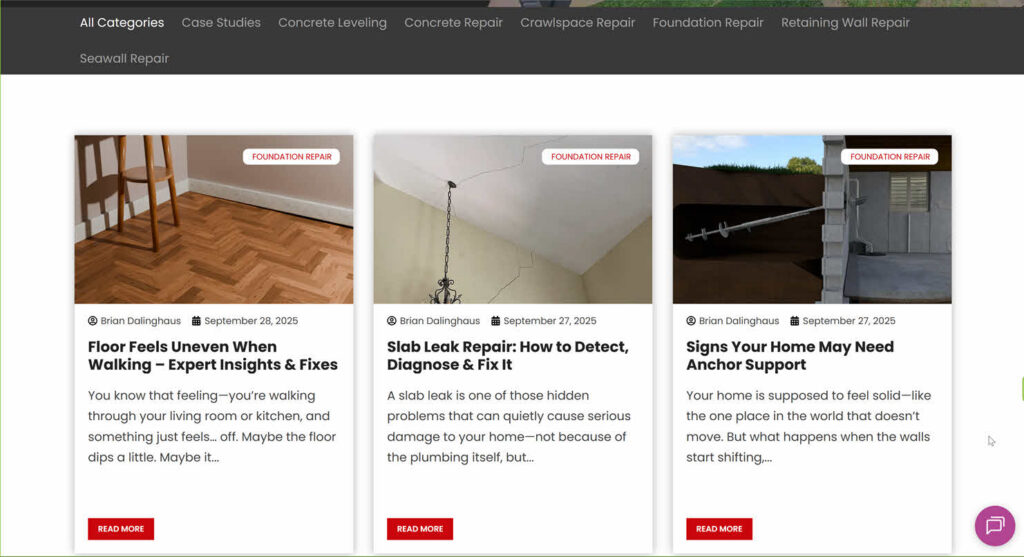
A Knowledge Centre is a different animal. It’s a dedicated section of your website, kept completely separate from your blog, that houses your in-depth articles answering your buyers’ specific buying questions. Cost. Problems. Comparisons. Reviews. Best options. We call these the Big 5. It exists to do one job. Help a buyer make a confident, informed decision.
Want to see what one looks like? Here’s my own Knowledge Centre, and here’s a plain-English explainer of what a Knowledge Centre actually is and whether it’s worth it.
That’s what Dalinghaus built, in spirit. A growing library of honest answers, organised so buyers could find exactly what they needed at the exact moment they needed it.
The problem ran deeper than the website
So what was really going wrong here? On the surface, the issue was obvious. Money going out on ads and redesigns. Modest growth coming back.
But the deeper frustration was this. Two brothers had built something genuinely good, a business with a real culture of doing great work and treating people well, and the marketplace couldn’t see it clearly enough to choose them over bigger, better-funded rivals.
That’s the bit that stings, isn’t it? Be honest. When you know you’re the best option in your market, and you’re still its best-kept secret.
And there’s a quiet unfairness sitting under all of it. A hardworking, honest business shouldn’t lose customers simply because a competitor is louder or spends more.
What they did, step by step
So what did they actually do? Nothing clever. The plan was simple enough to act on, and that matters, because complicated plans never get finished.
- They committed as a team. Not just marketing. The founders, the sales reps, everyone bought in.
- They wrote the answers down. The sales veterans already knew every question a buyer would ask. Marketing and sales sat down together and built a vetted library of thorough, honest answers.
- They put those answers to work in sales. Reps sent the relevant articles to prospects before a call or a site visit. This is Assignment Selling, and it’s where a lot of the magic lives. By the time a prospect spoke to a human, the big questions were already answered. They turned up half-sold.
Organic traffic started pouring in. People hungry for straight answers. Many became customers. Many didn’t, and that was fine, because every reader left trusting the Dalinghaus name a little more. The ones who weren’t ready today remembered them twelve months later, when they were.
The results
So what did a year of this buy them? Have a look.
- A 40% increase in revenue. Roughly $7.5m the year before, climbing to around $10.5m.
- 56% more deals closed.
- A 141% jump in deal velocity (deals moving faster through the pipeline).
- A 16-week backlog at one point, even after hiring extra crews to keep up. (A good problem to have, that one.)
From a handful of staff to almost 60 people. Let that sink in. That growth was fuelled by content. Not gimmicks. Not ad spend. Just answers.
Co-founder Brad summed it up. He’d recommend the approach to any business owner, because their success was finally back in their own hands. “It’s a wonderful feeling,” he said.
“Yes, but we’re different”
Now, I can almost hear it.
“Mark, that’s a US foundation-repair firm. We’re B2B. We’re smaller. We’re in a regulated space. Our buyers are different. Our product’s more complex.”
I hear some version of this on nearly every call. And I need to gently take it apart, because this one mindset quietly poisons more good businesses than any competitor ever will.
Here’s the thing. Every business on earth, whatever its size, sector or complexity, is in the exact same business. The business of trust. Whoever earns the most of it wins.
So forget the whole system for a second and ask yourself one question.
Would being more honest and more helpful about your prices, your problems and your comparisons make your buyers trust you more?
If the answer’s yes (and it always is), everything else is just detail.
It works in B2B. CSI Accounting made prospects read a frank “what it’s like to work with us” article and watch a video before they could book a call. Their average sale price rose around 10% in year one and nearly 40% in year two. It works for complex, high-value sales. Opes Partners filmed themselves grilling property developers with brutally tough questions on camera, and built the most-listened-to business podcast in their country. It even works where buyers usually dread the sales process. AIS built an unbiased tool comparing rival copier brands with real price ranges, and let buyers buy without ever speaking to a rep.
Different worlds. Same principle. Trust. If you’d like to chew this over properly, I’ve written a piece on whether a done-for-you Knowledge Centre is right for a business like yours.
A fair word about the other side of the coin
I won’t pretend everyone who tries this wins.
The stories in Endless Customers are the success stories. For every Dalinghaus, there are plenty of DIYers who read the book, get fired up, write a dozen rushed articles, and quietly give up by spring. Not because the methodology let them down. Because doing it properly is far harder than it looks.
Here’s something I’ve found without a single exception. Every business owner who shows me the articles they’ve written themselves, following the framework, they’re not good enough yet. Not close. And they can’t see it, because they’ve nothing world-class to compare against. (That’s not a criticism. It’s just what happens when you try to master something without having done it hundreds of times.)
So here’s the honest choice in front of you. You can build it yourself, slowly, and hope you’ve cleared the quality bar. Or you can hand it to someone who’s been doing this since 2013, trained by the man who wrote the book, and get it done fast and to a genuinely world-class standard, so you’re not sitting in exactly the same spot twelve and twenty-four months from now.
The Knowledge Centres I build are world-class in their design. But the real service, the thing that actually moves your sales needle, is the articles and the way they’re written and optimised for your buyers, for Google, and for ChatGPT. Marcus gave the world the methodology. I took it and aimed for the best Knowledge Centres on the planet. I’ve gone beyond the ones his own agency built for the companies in his book. Don’t take my word for it. Compare the articles yourself.
If you’re wondering what that costs, I’ve put real numbers on the table right here. How much a done-for-you Knowledge Centre really costs (and whether it’s worth it). And here’s the full done-for-you service if you want the detail.
Imagine the feeling when you finally hand this over to a true expert who simply gets it done. No more half-finished content project nagging at you on a Sunday evening. No more wondering if it’s good enough. Just relief.
A quick word on the “it’s American” thing
You’ll have spotted that Dalinghaus is a US company. The names, the dollars, the whole “foundation repair” sector feel distinctly American.
Here’s why that’s good news for you.
When I was chatting with Marcus, he told me this methodology is huge in the States. They’re often a few years ahead of us over here. Far fewer UK businesses are doing it properly, which means the gap in your market is wide open right now. That gap is yours to take, if you move first.
And here’s the bit that doesn’t change with the country or the decade. Technology shifts. Google changes its rules. AI arrives and rewrites everything. But trust is a principle, and principles don’t move. Bury your head in the sand, ignore the questions your buyers are asking online, and you simply hand them to a competitor who’ll answer instead.
If you don’t do it, other sharks in your market will scrape up the pieces.
Why this matters more than ever
Why should any of this matter to you in 2026? There’s a second reason a Knowledge Centre earns its keep, and Dalinghaus caught the early wave of it. Search.
Today it goes much further. Your buyers aren’t only Googling any more. They’re asking ChatGPT and AI assistants who to trust in your industry. And those tools learn to recommend the businesses that have genuinely, thoroughly answered the questions. Generic AI-churned waffle gets filtered out. Real human expertise gets put forward.
Here’s the bit I really want you to notice. Think about what a Knowledge Centre really is. It’s a salesperson who works every hour of every day, never sleeps, never pulls a sickie, never asks for a pay rise, and never has an off day on the phone. It works for humans first, earning trust while a buyer is on your site and deep in your sales process. And it quietly trains Google and AI to put your name forward. Worth a read on this point: Is AI Recommending Your Small Business?
What this means for your business
Strip away the dollars and the foundation repair, and Dalinghaus is simply a good business that finally got found and trusted. Not by hiring slicker salespeople. Not by shouting louder or spending more. Just by being more helpful than anyone else in its market.
You can do exactly the same. Whatever you sell. Whatever your size. B2B or B2C, simple or complex, regulated or not.
You have a gift, and you’re responsible for sharing it with the world. Make it happen.
Let’s have a proper chat
So here’s my question to you. Twelve months from now, when a buyer in your market asks Google or ChatGPT who to trust, will they find your answers, or the firm down the road? One name is going to come up. It might as well be yours.
Book a 30-minute call with me here. We’ll talk about your business, your buyers, and the questions they’re really asking, and whether a Knowledge Centre is the right move for you. No pressure, no jargon.
And if you’d like to get to know me a little first, here’s my story.
Project Specifics
-
Knowledge Centre
-
Writing Big 5 Topic Articles
-
Assignment Selling
-
Lead Generation
-
Search Visibility
-
Buyer Education
-
Founder-led
-
Bootstrap